Advan Research
Login icon LOGIN
SiteOne Landscape Supply

SiteOne Landscape Supply

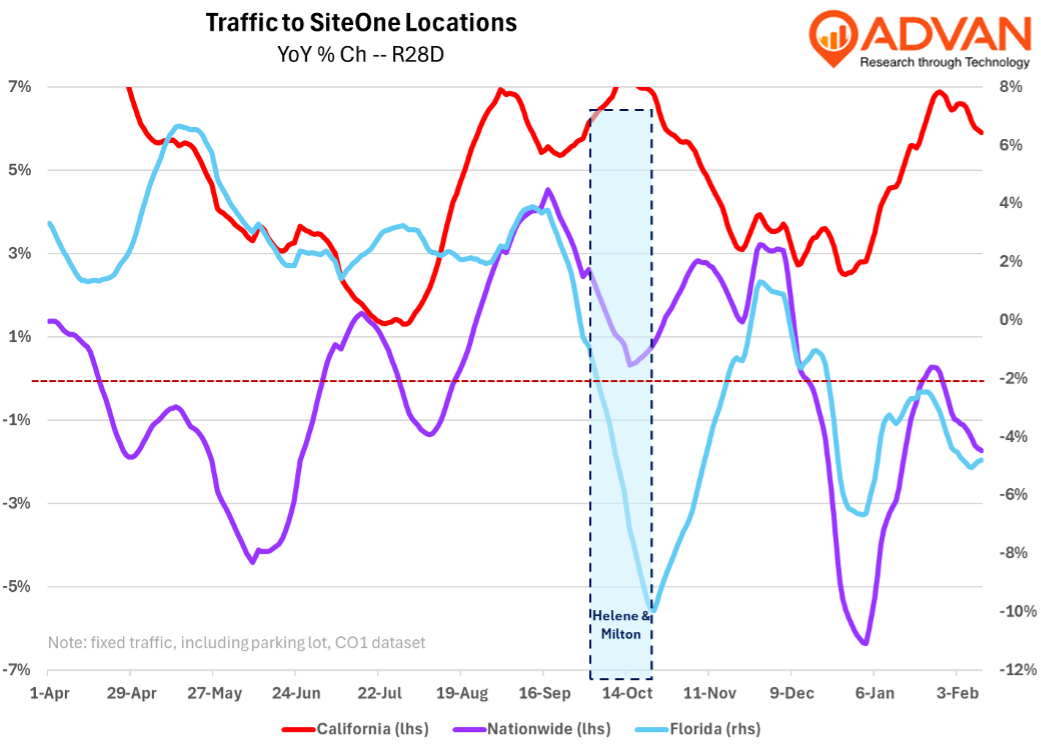
SiteOne’s business and results are interesting these days as they provide a read on the results of immigration policy on industries heavily dependent on immigrants, extreme weather and natural disasters, commodity inflation, and housing. The latter three of these were impactful to SiteOne’s Q4 as one can see in the chart below, obviously especially for Florida. The pick up following the hurricanes was quite abrupt and one would expect those orders to be larger which may be behind SiteOne’s daily volume increase of +4.
2 minutes
Amazon Efficiency

Amazon Efficiency

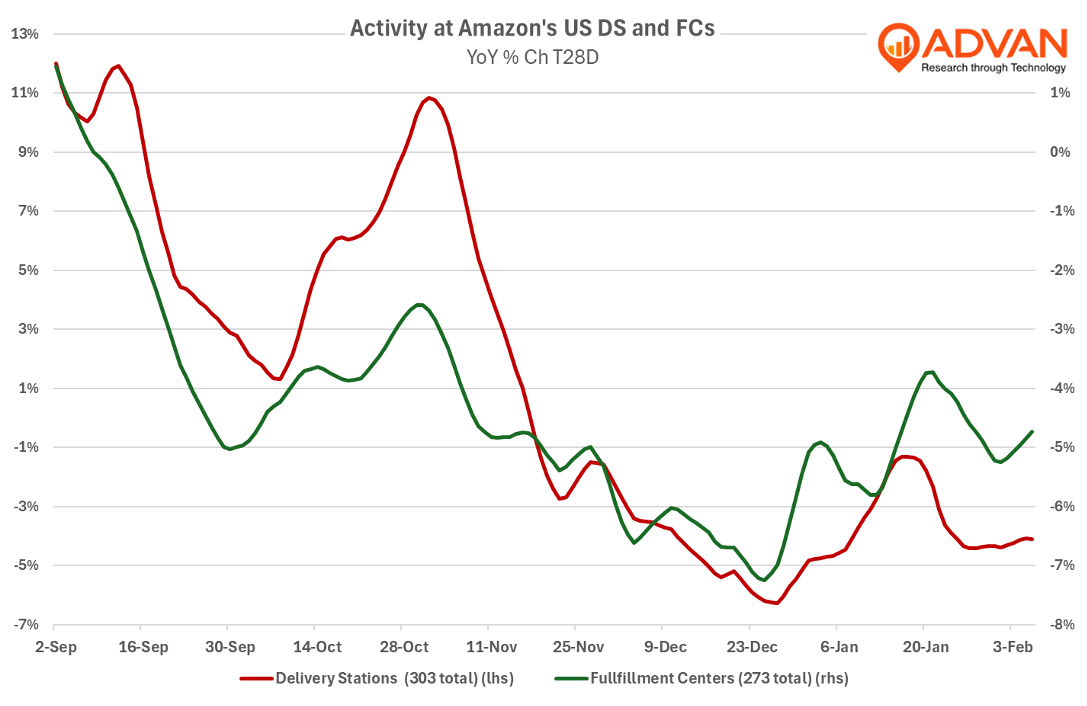
What struck us about Amazon’s Q4 results was the significant upside in its North America margins and profits; margins hit 8.0% vs. the expectation of 6.5% (BBG) and EBIT hit $9.3B vs. the expectation of $7.4B. Amazon has worked diligently to lower the cost to serve since early 2023 by staging more of its inventory close to the consumer using predictive inventory planning and is regional delivery stations. On the call, CEO Andy Jassy said, “Our speed of delivery continues to accelerate, and 2024 was another record-setting year for Prime members.
2 minutes
Tracking the Impact of the Dockworkers Strike with Location Data Insights

Tracking the Impact of the Dockworkers Strike with Location Data Insights

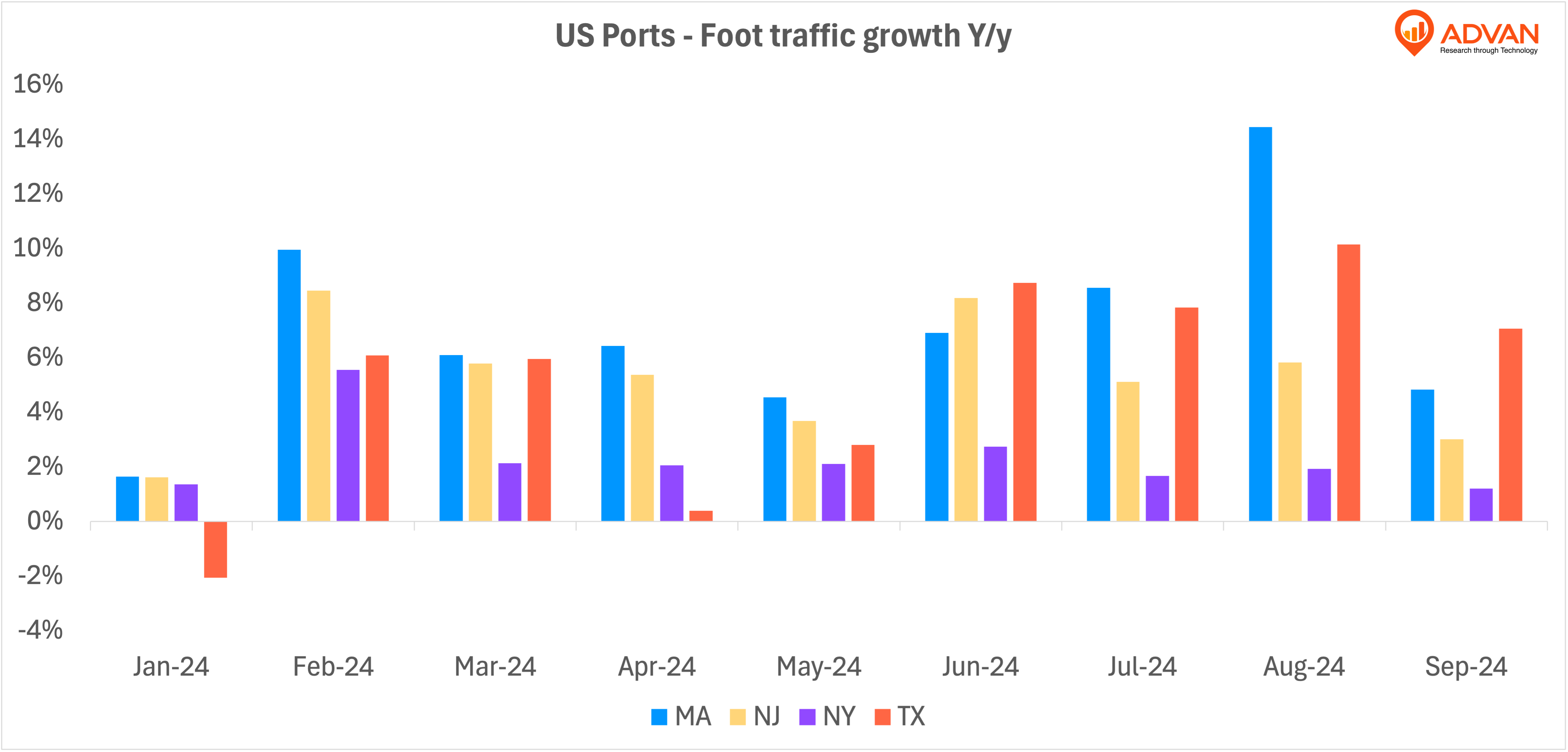
With the dockworkers’ strike that started at midnight disrupting port operations across the East and Gulf Coasts, it’s essential to understand how this will affect the flow of goods into and out of the U.S. Ports are critical infrastructure points, and the impact of strikes or delays can reflect across industries. This is where Advan’s location data offers a crucial lens for tracking foot traffic at major ports, providing almost real-time insights into how these disruptions play out across the economy.
3 minutes
TOYOTA (TM): Immune to Shortages and Supply Chain Headwinds

TOYOTA (TM): Immune to Shortages and Supply Chain Headwinds

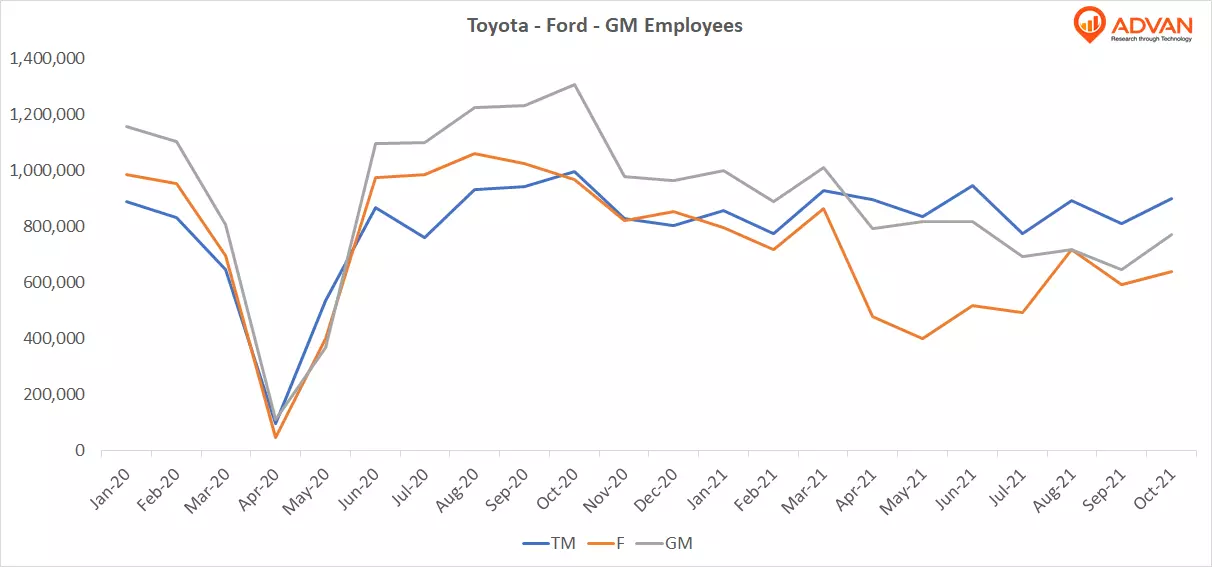
Automotive is one of the industries that has been struggling with chip shortages, supply chain issues and labor shortages for months now. But do all the carmakers struggle at the same level? To answer the question, we employed Advan’s foot traffic data for two US automakers and one Japanese: Ford (F), General Motors (GM) and Toyota (TM) respectively. Starting with Toyota, the largest manufacturer in the world by the number of units produced, we see that the total number of employees each month does not fluctuate considerably after the sharp drop in the early months of the pandemic.
2 minutes
How Many Replacement Non-Union Workers is Deere Using?

How Many Replacement Non-Union Workers is Deere Using?

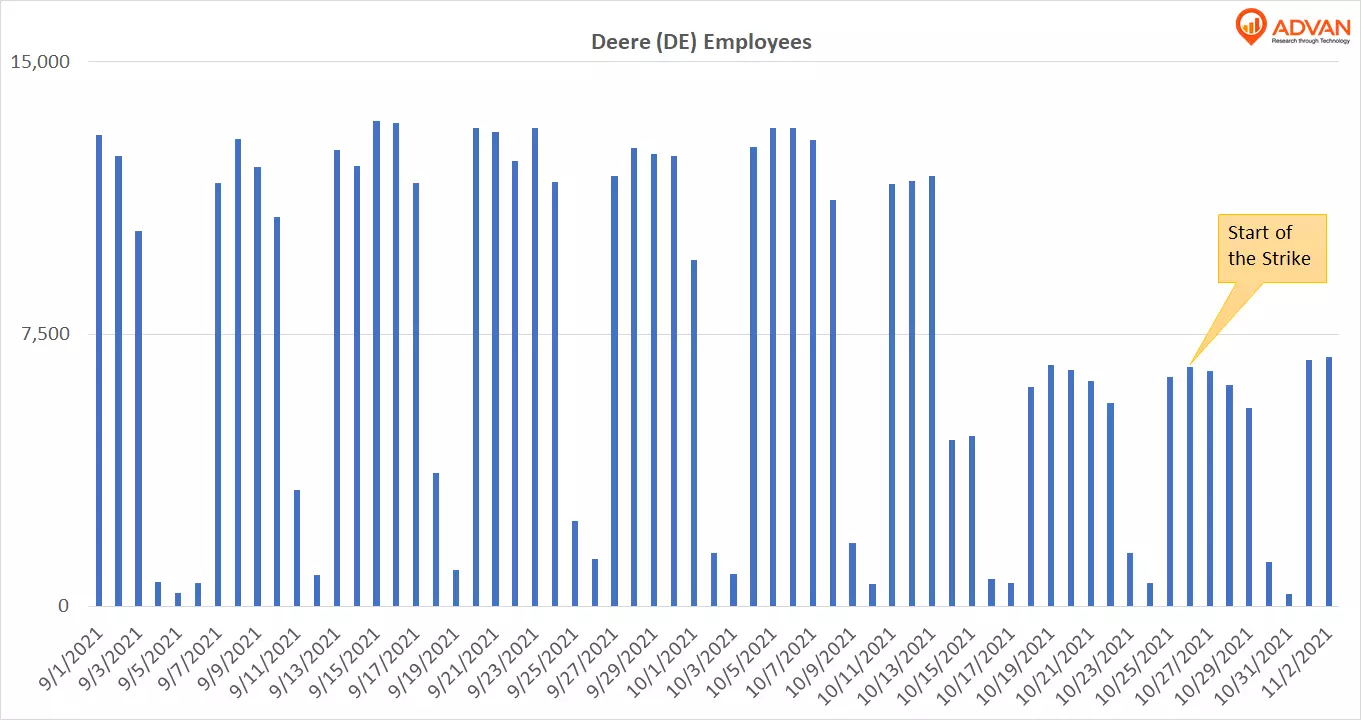
Workers at Deere & Co. (DE), the world’s top agriculture equipment manufacturer, walked out of its factories to demand better pay and health benefits, a move that had not be seen in over 30 years, and while the company is on track for its most successful year ever. The strike started on Oct. 14 with about 10,000 employees or about 15% of Deere’s workforce (according to Bloomberg ), refusing to work in an effort to change their contracts.
2 minutes
Ford Says Chip Shortage Forcing Production Halt at Several Plants

Ford Says Chip Shortage Forcing Production Halt at Several Plants

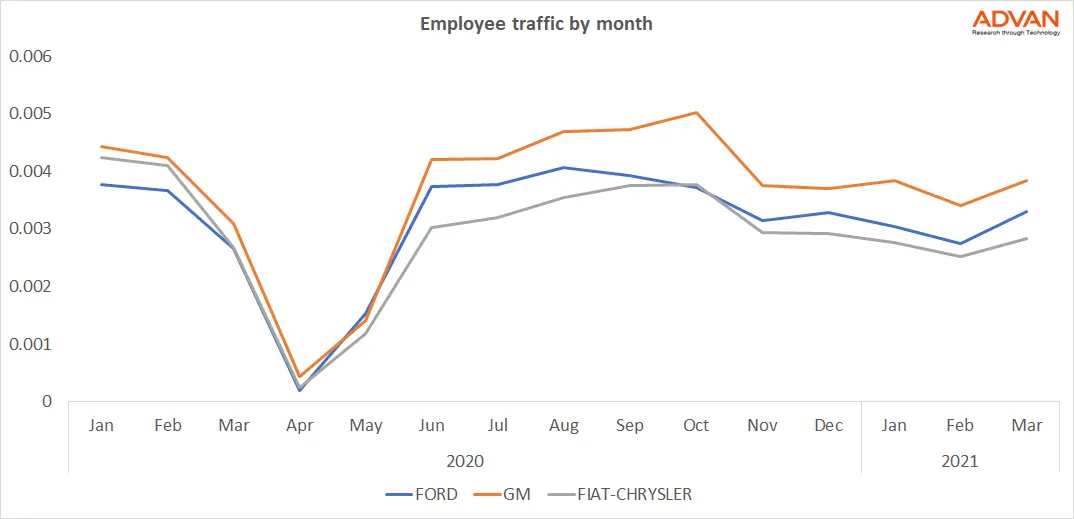
Following the recent news that Ford is expected to halt production for two weeks in April due to chip shortages, and given our recent study on this exact subject few months back we wanted to take a closer look and quantify how the largest US carmakers and the industry as a whole is currently affected. Employee counts are often times the right metric produced by our foot traffic data to analyze industrial companies.
2 minutes
Mattress sales are soaring, bedding manufacture's activity confirms

Mattress sales are soaring, bedding manufacture’s activity confirms

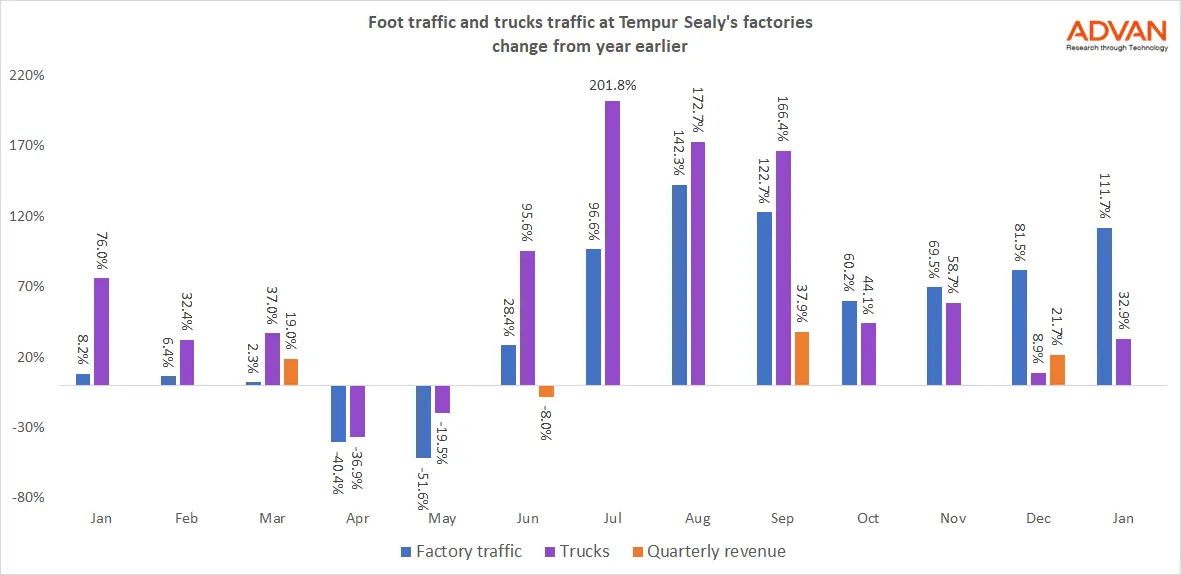
It’s been a year now into full or partial lockdowns, social distancing rules and work from home as a result of the COVID crisis which unequivocally forced people to spend more time into their homes and consequently to change their shopping habits - reconsidering what is essential and therefore set new priorities on what to buy. One of the new essentials seems to be – not surprisingly – bedding products as people seek extra comfort at home.
2 minutes
Carmakers are facing a new challenge: Chip Shortages

Carmakers are facing a new challenge: Chip Shortages

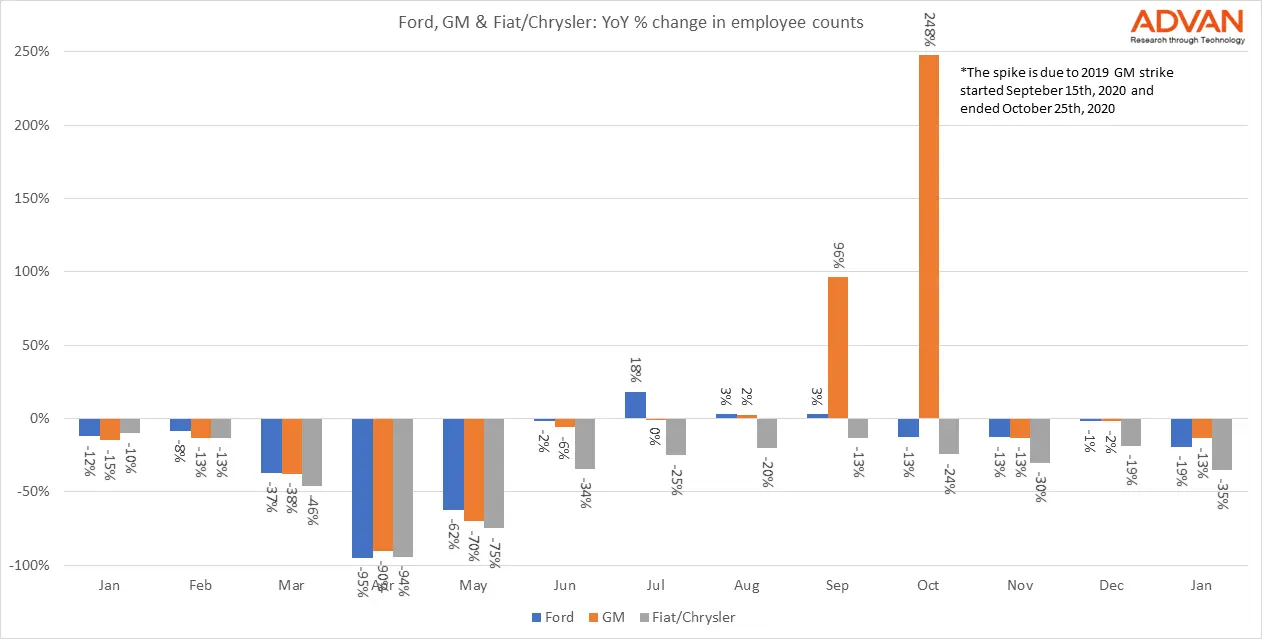
After the lockdown last spring that forced manufacturers from all sectors to halt production, auto makers now have to face another challenge: the global chip shortage due to the high demand on consumer electronics (laptops, gaming consoles, TVs etc.). The increased need for the technology devices along with the initial lockdowns and employee furloughs overwhelmed chipmakers and now are struggling to keep up with the surge in orders. Another factor was the faster than anticipated recovery in the second half of 2020 as several manufacturers in the sector ramped up the car production to rebound from the spring’s shutdowns and increase the chance of hitting the year’s target.
2 minutes
Foot Traffic to Manufacturing Facilities Shows Over 90% Correlation with Revenues

Foot Traffic to Manufacturing Facilities Shows Over 90% Correlation with Revenues

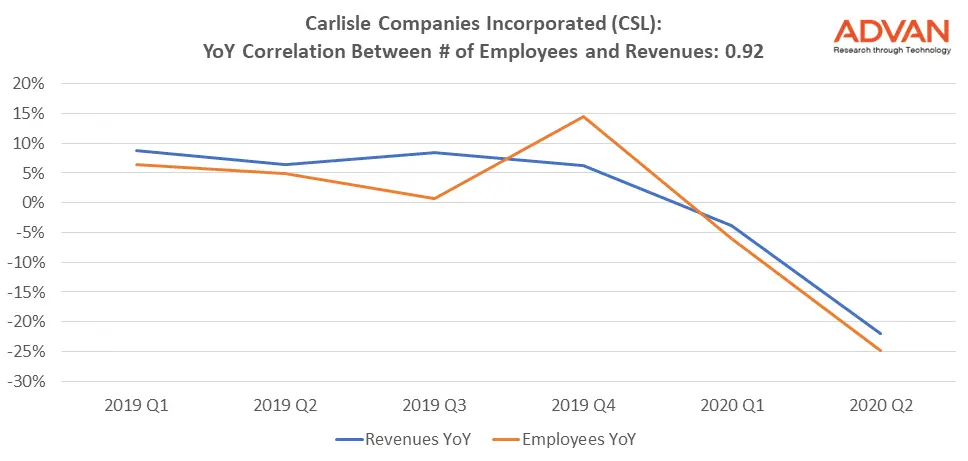
For investors, foot traffic data is fast becoming a critical weapon as part of an alternative data armory. The value of tracking real-time visitation numbers to retail and consumer-facing compa-nies is widely recognized. Yet, as we explore here, measuring traffic to industrial companies can offer even more effective signals to predict top line performance. It is intuitive that the number of employees at production facilities should be an indicator of pro-duction, which in turn would help forecast revenues.
2 minutes
Rebound at Consumer Discretionary Businesses Reinforces Differences Between States

Rebound at Consumer Discretionary Businesses Reinforces Differences Between States

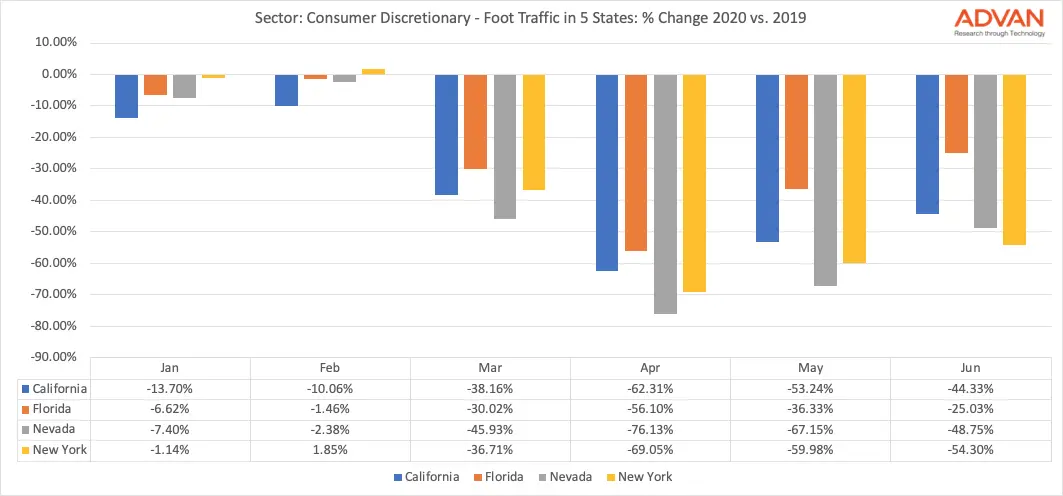
In this third blog post of our summer series, we review two different measures of economic activity that can help paint an overall picture of consumer trends. Measuring foot traffic at consumer discretionary businesses helps us understand the extent to which people are back to shopping for non-essentials - an indicator for increasing flexibility of movement and confidence in the outlook. During April and May there was a massive year-over-year drop in visits to non-essential locations.
2 minutes